
A Journey with the Sharps Rifle
By Tim Clayton
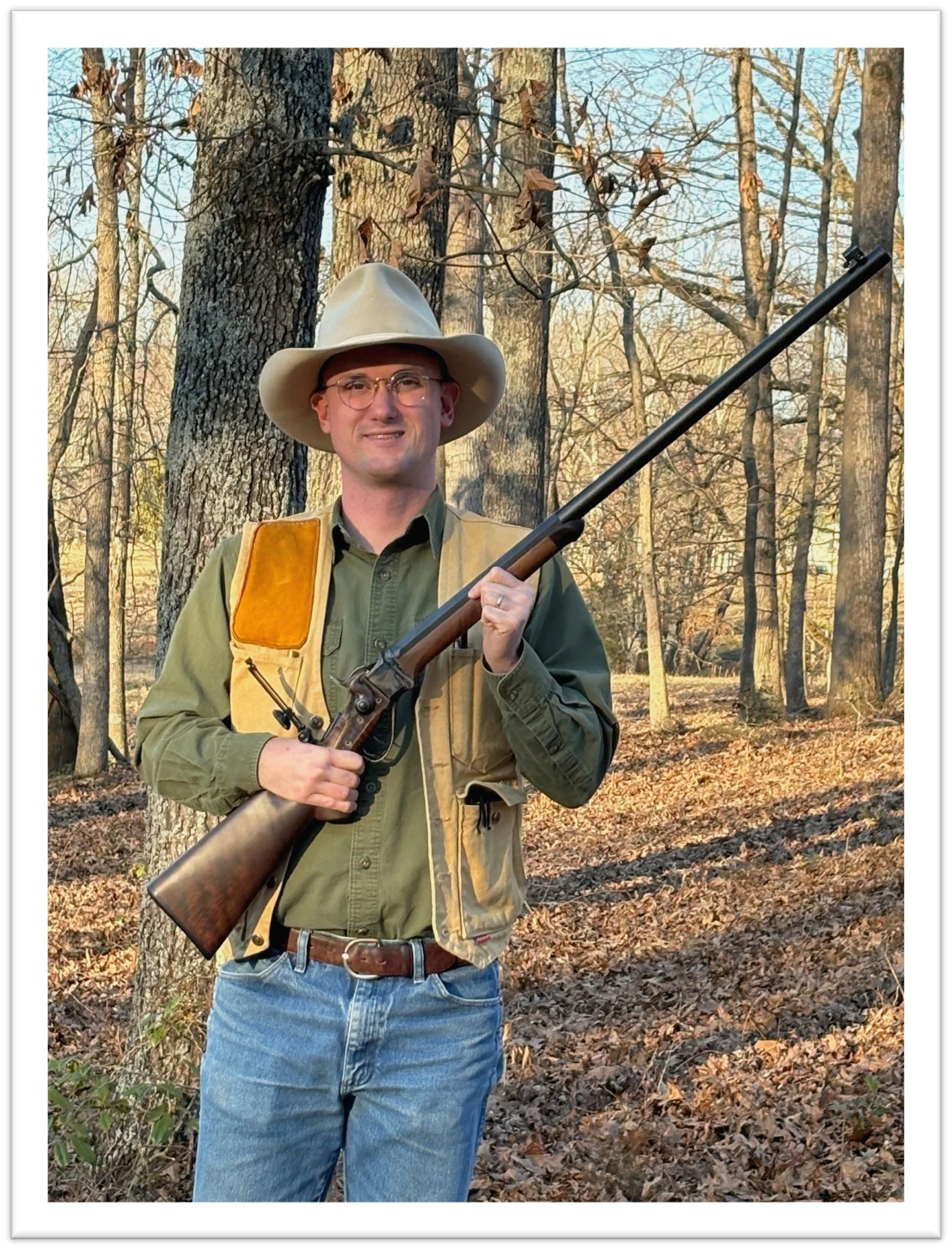
This authors interest in Sharps rifles started at an early age, (around 8 years old). My cousin, Harvey Pennington, first introduced me to his Shiloh 1874 45-110 during a summer visit to his house. According to him, I asked the very intriguing question of “why does the rifle have two triggers when it only has one barrel”? To me it seemed like a logical question from a boy not acquainted with 125-year-old gun designs. For the reader that is also not familiar; quite a few 1874 sharps rifles were fitted with a set trigger in the rear, allowing the front trigger to be used as a hair trigger (a design going back to early long rifles). This introduction and curiosity would feed my interest in old rifles. An interest soon to be fed.
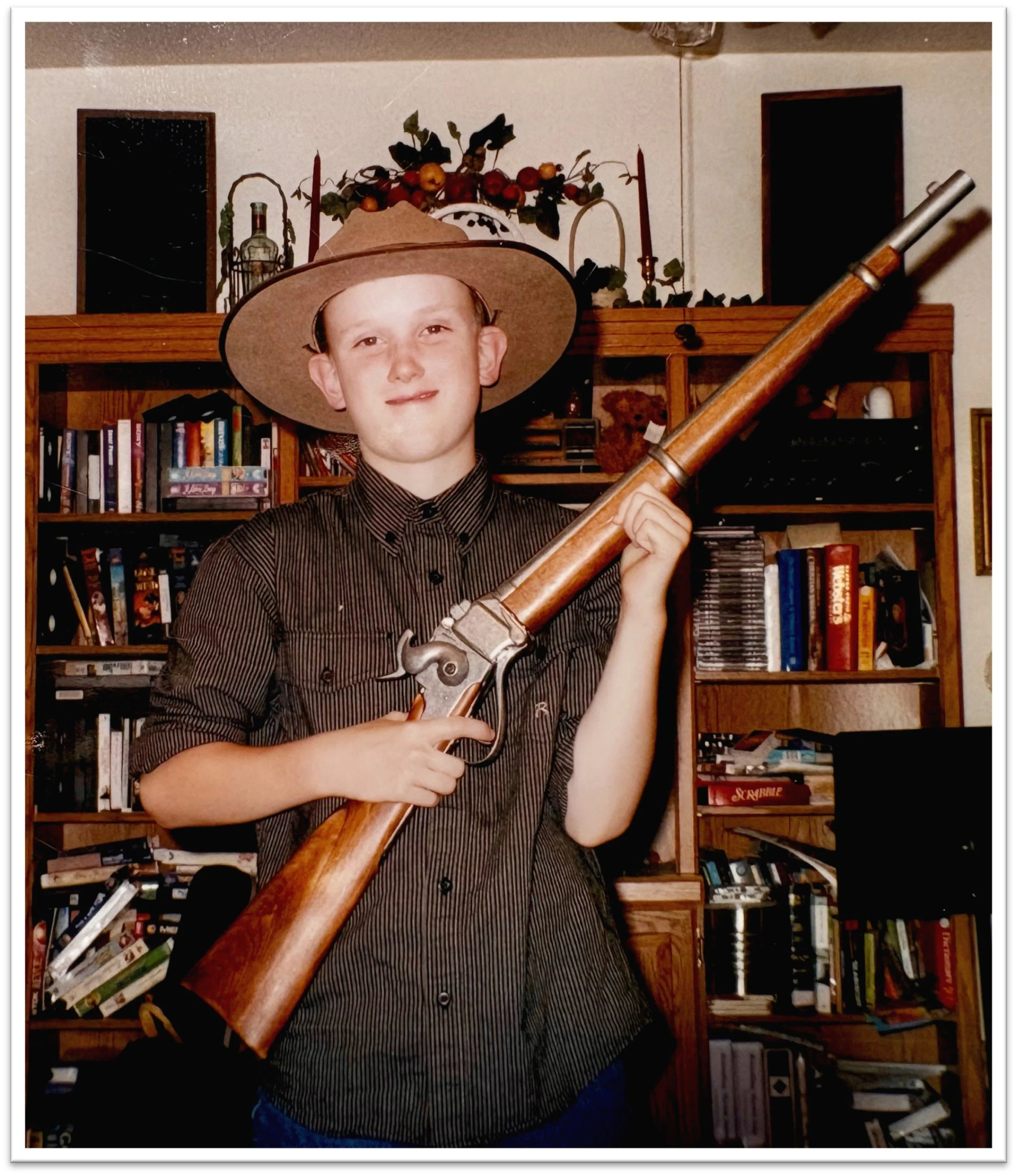
My first Sharps “rifle” was gifted to me when I was nine. My parents were trying to encourage me to complete a Suzuki violin book. I didn’t have an interest in violin lessons; however, I did have an interest in guns. I grew up in town, and even a nine-year-old boy knows he can’t use a real rifle in town. Thankfully, the new (to me) internet was full of non-firing replica rifles, and I had already been on the hunt for one. My parents saw the opportunity and asked me what replica gun I would want if completed my book and recital. Without hesitation, I requested a Sharps! I asked cousin Harvey to join on guitar, for my recital. After a successful performance, I was gifted my replica Sharps! The replica is an 1859 saddle ring military conversion model. Over the years, I amateurly modified it to suit my needs as a “hunter and shooter”. Some of the work, (I would realize later), was not too far from actual gunsmith work in the transition period of the original rifles. That “rifle”, sits next to other rifles in my safe and is still a prized possession.
The first long range black powder cartridge shoot I attended was the annual Matthew Quigley shoot, held in Forsyth Montana. My cousin Harvey and his wife Linda, included me on their yearly trip to the match. Harvey loaned me a Remington rolling block built by his friend, Dick Kutsler. The rifle, a 40-65 win., sported a pistol grip target stock with a nice profiled 34in barrel and a MVA Soule sight. This rifle was a great introduction into BPCR shooting. I appreciated the use of it and knew I wanted a rifle of my own; hopefully an 1874 model Sharps.
Around a year after we went to the Quigley, Linda forwarded me a vague email listing for an 1874 Pedersoli Sharps. She saw it in a shooting club email chain and figured I needed to look at it. I’m sure glad she thought of me. The rifle ended up being a 40-65 ’74 sporting model with 30-inch octagonal barrel in like new condition. It sported a Ukrainian Soule rear sight and globe front sight. The rifle has exceptional wood for an Italian make. I met with the owner and purchased the rifle for a very reasonable price. With this rifle; I would learn to cast quality bullets and (through much strife), load match quality ammo. A whole article could be written on the trials went through learning the basics of loading for this rifle. However, it was a great rifle to start on. Like most gun cranks, I was yearning for something more. From those early years as a boy, into my adulthood, I had always wanted a custom Sharps. Last year (with much support and convincing from my wife), I decided I was in a position to, at last, order a custom rifle.
Many of the readers will know the two foremost Sharps companies are C. Sharps Arms Co. and Shiloh Rifle, both of Big Timber Montana. Both companies produce heirloom quality and match accurate rifles. A shooter can’t go wrong with either. I looked at both companies before settling on C. Sharps, an easy choice as my wife’s cousin works there and my cousin has two of their rifles.
The rifle would have to be dual purpose for targets and hunting, so a caliber suited for both would be necessary. The logical choice would’ve been to order a 45-70, a historical caliber equally useful on the range as it is in the woods or prairies. Many shooters win matches with the 45-70 and many animals have fallen to the cartridge. I have never been one to follow a logical path, so I decided on a 45-90. The 45-90, also known as the 45- 2.4, is an intriguing cartridge to me. A nice balance between the 45-70 and the 45-100, with enough powder capacity to reach 1000+ yds. The long-range usefulness was an important factor because I have plans to compete in the resurgence of Creedmoor and other long-range matches.
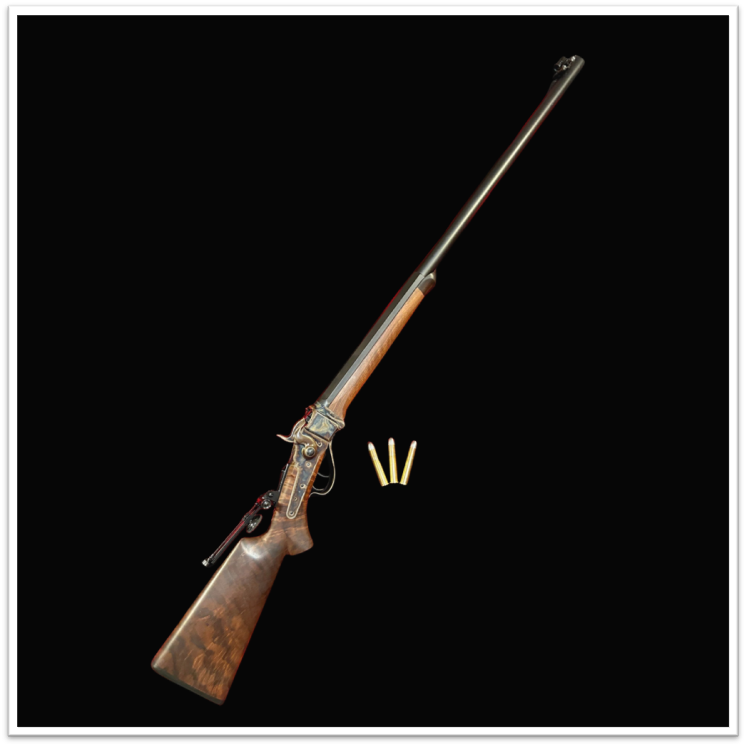
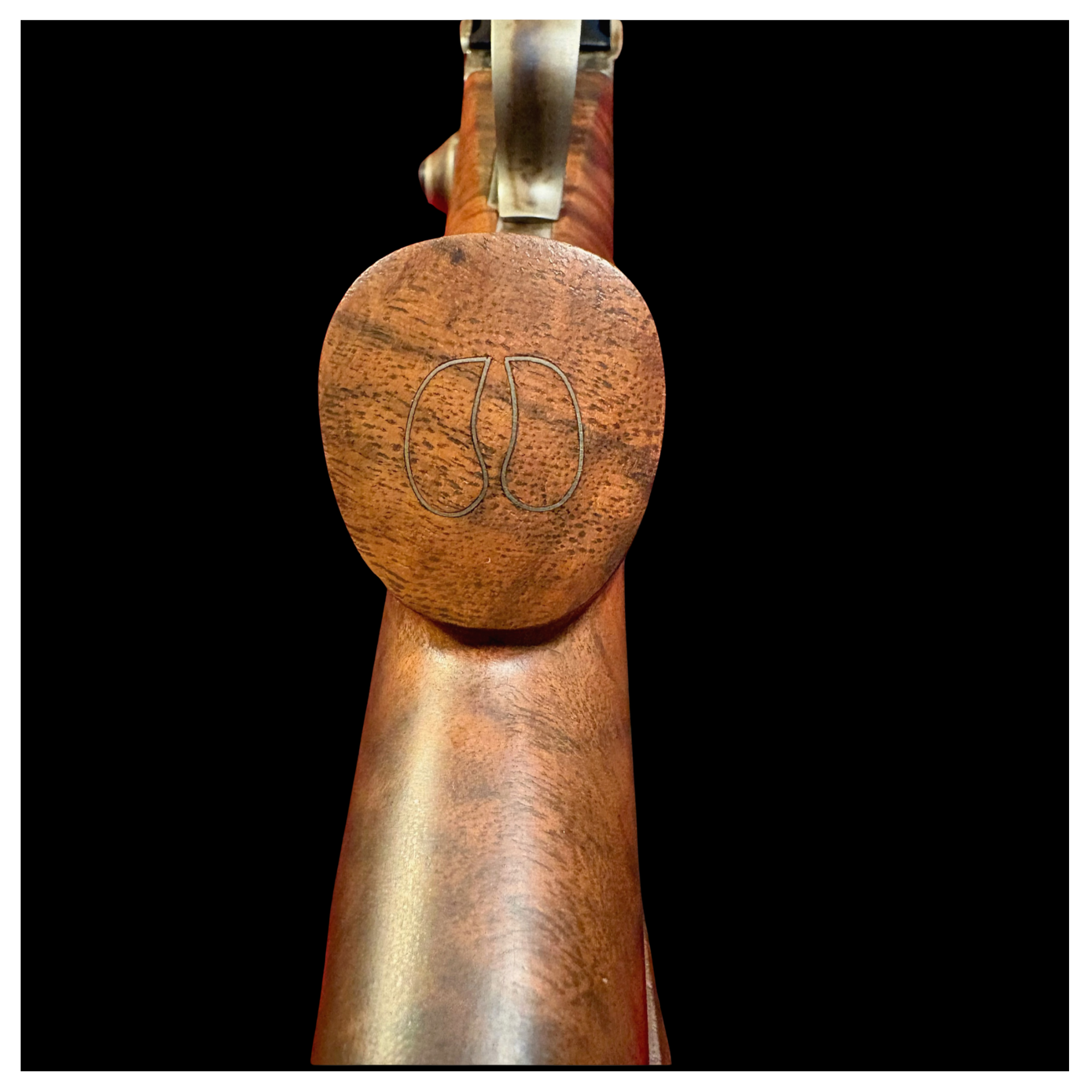
Almost four months to the day of ordering, I got a call from my local gun store saying I had a rifle waiting. To say I was excited would be an understatement! I drove over and picked up my rifle. It was prettier than I could’ve imagined. Everything I had ordered was there, along with a surprise buffalo hoof inlay on the grip cap. The silver solder inlay was gifted by the stock fitter at C. Sharps, a truly special addition to a beautiful rifle. On close inspection I found the stock had cracked at the wrist. This is an unfortunate hazard of shipping high comb target stocks with heavy barrels. I called the folks at C. Sharps and was assured they would fix it. The stock was sent back and within a month it was returned with a perfect fix. I was happy they could fix the stock I had chosen. I’m sure they would’ve restocked it if requested. With a complete rifle at last, I could begin the journey with a new rifle.
With the cartridge decided, it was time to pick the rest of the rifle. I wanted a rifle of target configuration with a 32-inch half octagonal and half round barrel. I planned to mount a Soule year sight and globe style front sight. Luckily for me, our annual trip the Quigley match would get us close to Big Timber, there I could hand pick the stock and details of the rifle. The process of going through a wall of wood and hand picking the stock for your rifle, is a thrill most gun enthusiasts will cherish. The folks at C. Sharps were very patient as I agonized on the choice of wood. They also gave us a thorough tour of the shop. The wood would be configured into a high comb target stock with pistol grip and black checkered butt plate. For the for-end, I requested a Schnabel style ebony tip. I was convinced to order the traditional pack hardened receiver and chose standard blue for the barrel. I also chose standard blued screws as well as escutcheons. I would supply a MVA buffalo Soule for the rear sight. With the lock, stock and barrel chosen; the order was placed. The folks at C. Sharps quoted around six months for delivery. I would anxiously await the delivery day…
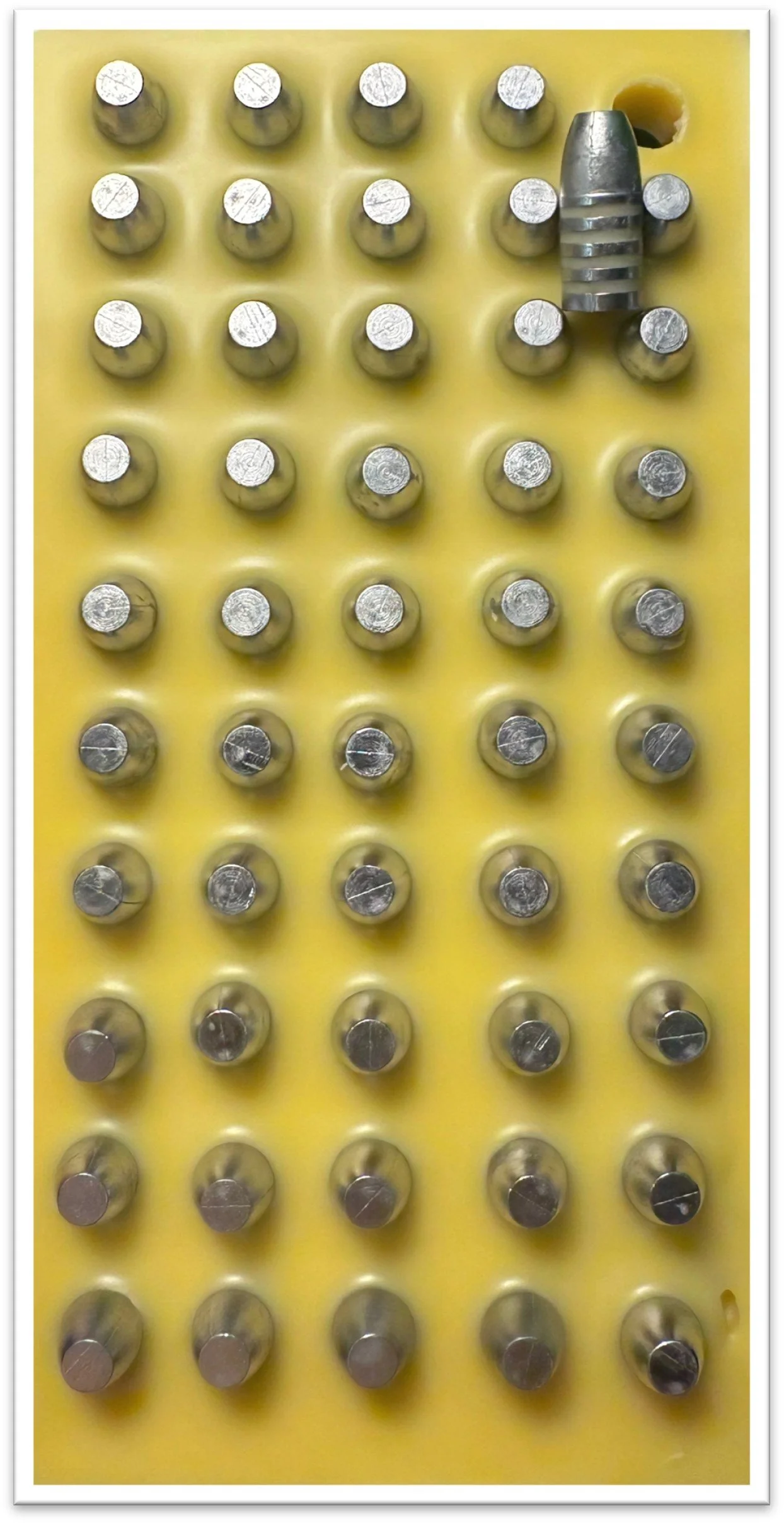
Initially I had planned to use the rifle for our Kentucky deer rifle season. Work commitments and sending the stock to get fixed foiled that plan. During the wait for the rifle, I sourced Starline brass, Lyman dies and a case of Swiss 1 ½ powder. With all the supplies needed, I could take my time after deer season to prepare a hunting load. For a hunting bullet, I settled on a Lyman 457193 mold cast with a 16-1 lead/tin alloy. The mold, having wide flat nose, would be suitable for Kentucky deer hunting. The bullet drops from the mold weighing 413 grains. I figure this bullet weight is similar to the 45-90 Express loadings. The bullets dropped size of .459 is perfect for my bore which slugged at .458. I pan lubed the bullets with a homemade lube. As of this writing, I found the 1 ½ Swiss powder with Federal GM215M primers gave a decently accurate hunting load. I plan to keep tweaking this load as the year progresses and will report on it later.
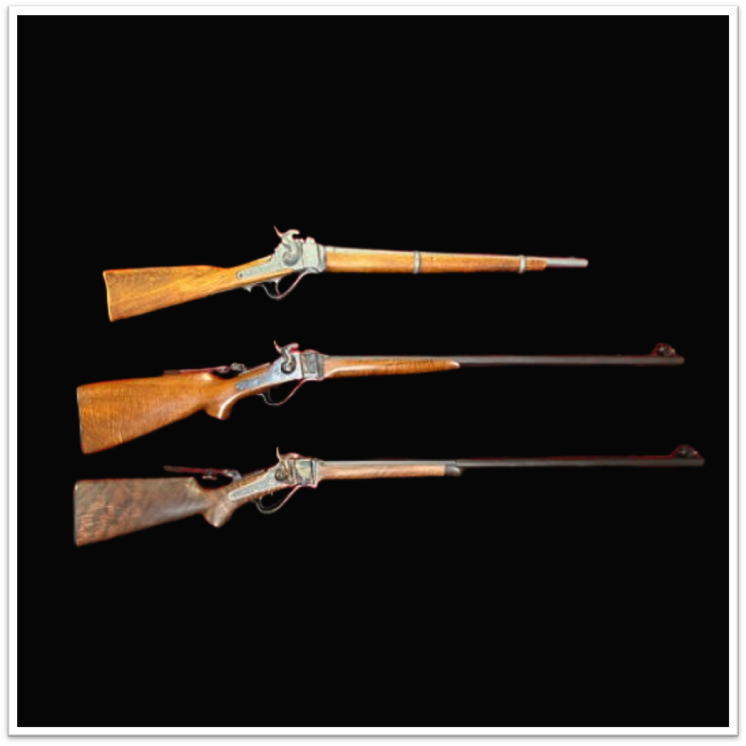
Ordering this custom C. Sharps was a realization of a dream going to back to childhood. A journey starting with a non-firing replica, moving to a quality Italian copy and then to the closest thing since Sharps closed their Bridgeport doors. The endless possibilities of future hunts, shoots and memories excite me when I pick up this new Sharps. Many great memoires come back to me when I pick up my other two Sharps. From city streets of my childhood, to Montana prairies or my cousins shooting range (where I proposed to my wife); the Sharps rifle has always held a special place in my life. I hope the reader, whether young or seasoned, starts a Sharps rifle journey for themselves. I’m sure it will become a memorable journey worth taking.
Tim Clayton